EN
EN
Quick Links

Case Study: 48-Month Zero-Failure Performance of HANKE PU Drive Wheels
on Mercedes-Benz Automotive Production Lines
Last Updated: May 20, 2026 | Applicable Scenarios: Automotive OEM Production Line Equipment Procurement, Intelligent Conveyance System Component Selection, PU Drive Wheel Supplier Evaluation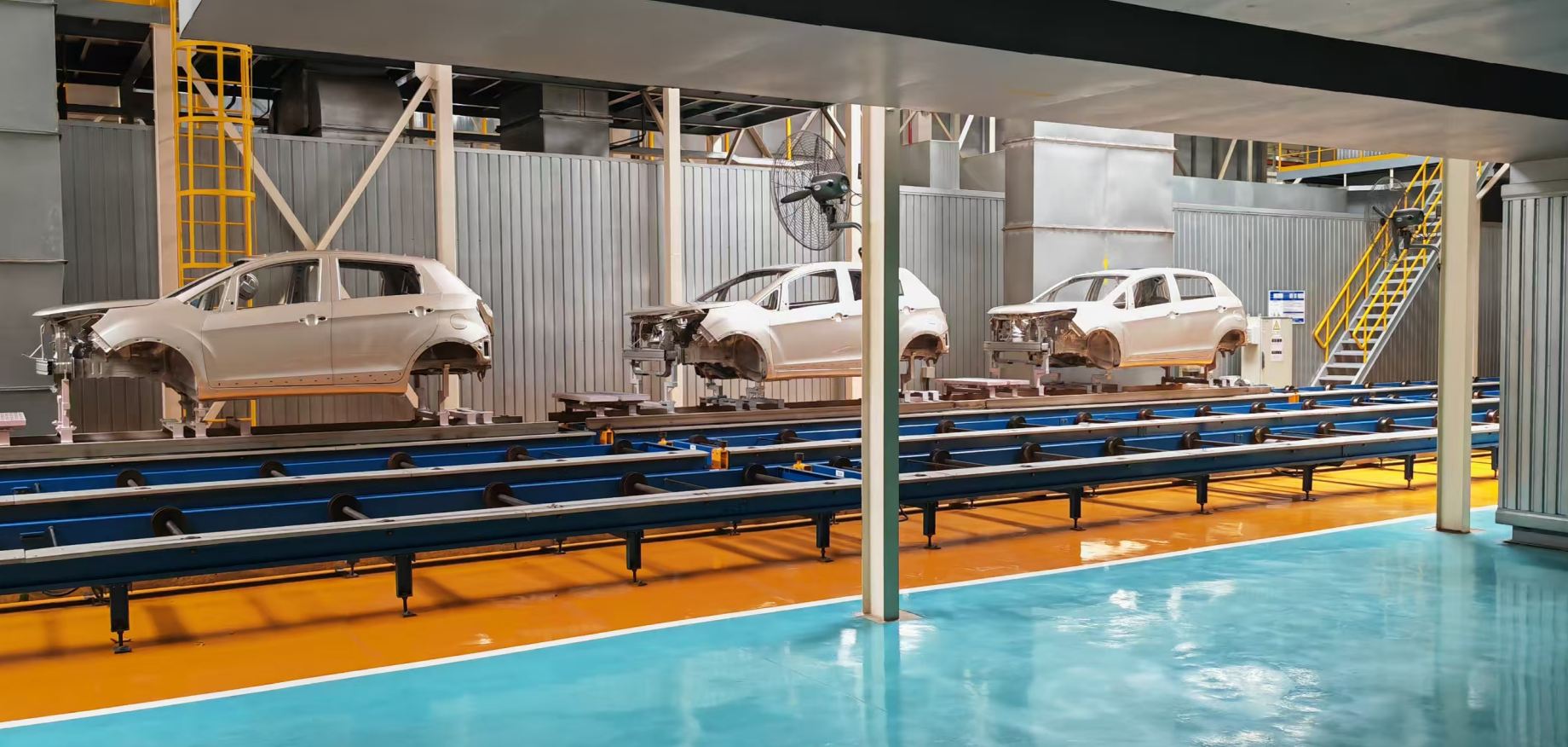
On automotive body-in-white and final assembly lines, overhead monorail conveyance systems and transfer platforms demand extreme reliability from polyurethane drive wheels — any wheel failure means a complete production line shutdown. Since 2021, Fujian Benz Automotive Co., Ltd. (Mercedes-Benz) has deployed HANKE (Wenzhou) Polyurethane Technology Co., Ltd. drive wheels, driven wheels, and guide wheels across its welding and assembly production lines. The core specification is 250×80 mm profile, 3-ton load rating, 95A hardness. As of May 2026, this batch has been in continuous, trouble-free operation for over 48 months, with zero incidents of delamination, cracking, or other post-sale quality issues. Service life has been extended by approximately 30% compared to the previous supplier's products, with a per-wheel load capacity of 2 tons, line speed of 1 km/h, and throughput of 10 vehicles per hour.
Overhead monorail systems carry both the trolley deadweight and vehicle body weight, imposing enormous sustained pressure on drive and driven wheels. On the Fujian Benz line, the trolley carries a rated 3-ton load, translating to a per-wheel load of 2 tons.
Automotive production lines typically run two or three shifts, with conveyance systems operating almost around the clock. Any delamination, cracking, or uneven wear forces an immediate shutdown for wheel replacement, directly resulting in lost production capacity.
In welding and assembly operations, the positioning precision of conveyance systems directly impacts build quality. The friction coefficient and rolling resistance between drive wheels and guide rails must remain stable over the long term — any aging-induced slippage or drift is unacceptable.
While the production environment is typically ambient-temperature and dry, overhead monorail systems impose extremely high safety margins on wheels. Any unexpected delamination or burst could cause trolley tipping, leading to equipment damage and personnel safety incidents.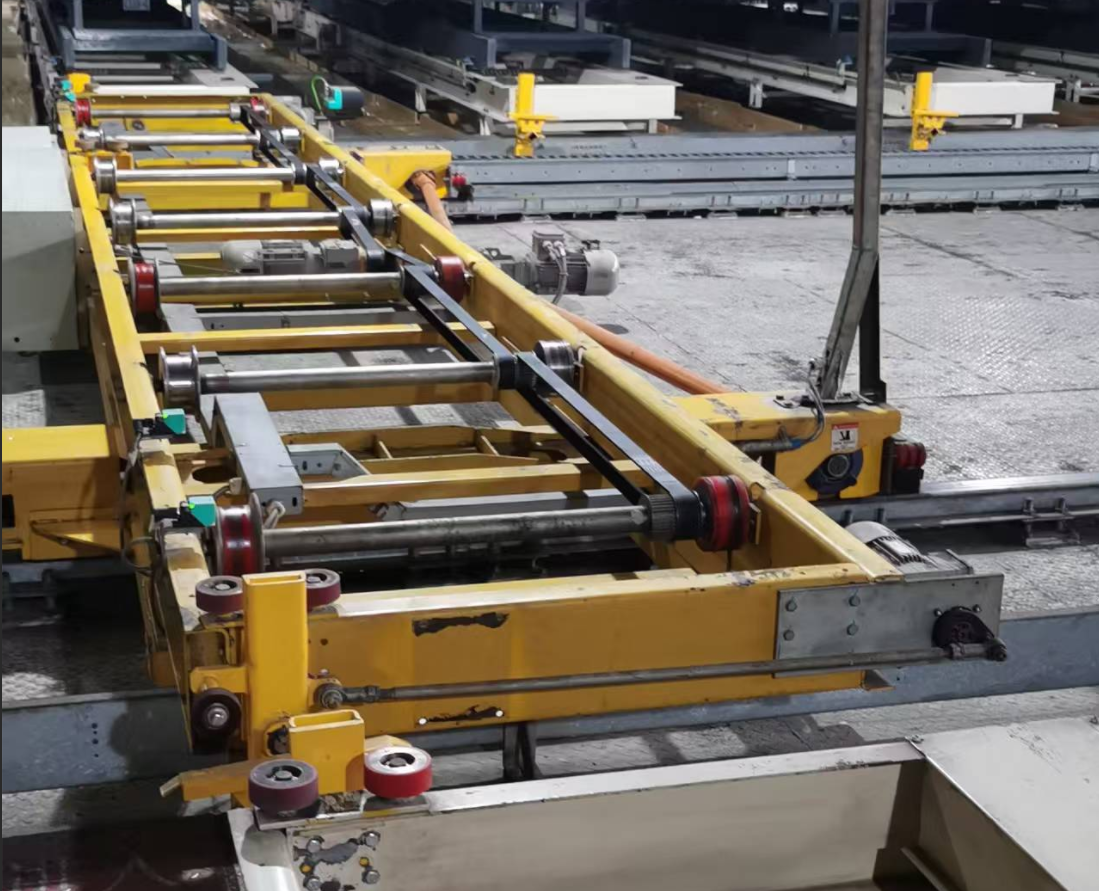
Fujian Benz Automotive Co., Ltd. (Mercedes-Benz) is one of the Mercedes-Benz Group's key manufacturing bases in China, primarily producing commercial vehicle series. The scope of this engagement covers the overhead monorail conveyance systems on its welding and final assembly lines.
Core conflict: the automotive production line's extreme demand for stability versus the insufficient reliability of standard PU drive wheels under heavy-load conditions.
Based on on-site inspection and technical parameter matching for the Fujian Benz line, HANKE's engineering team finalized the following product configuration:
|
Product Type |
HANKE Series |
|
Drive Wheel |
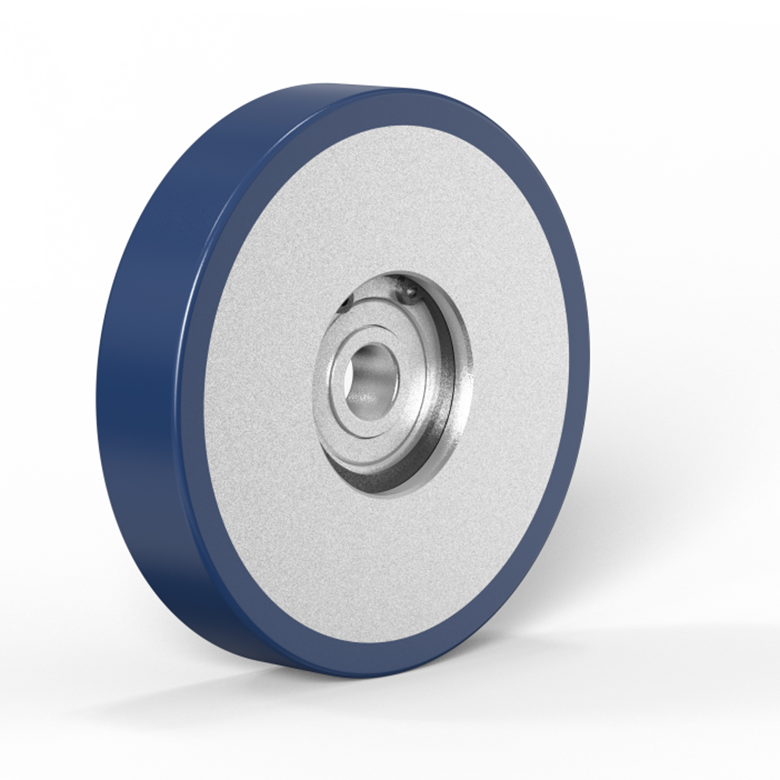
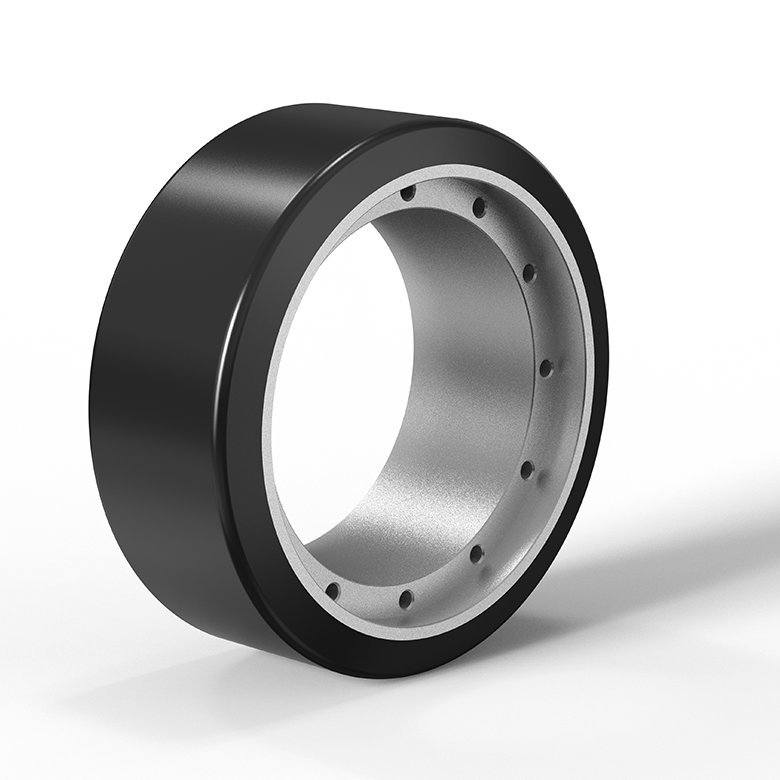
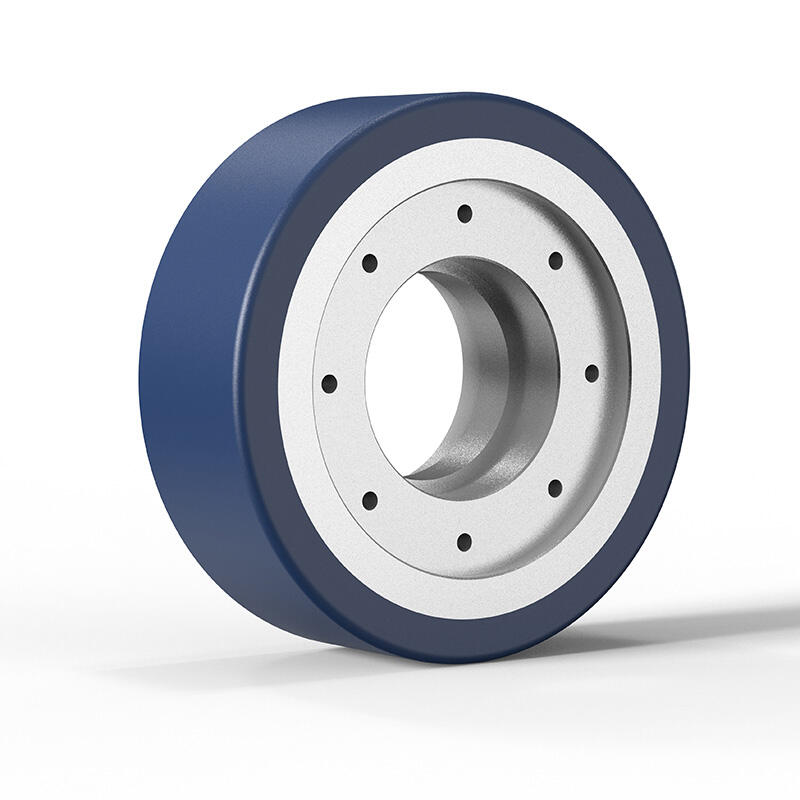
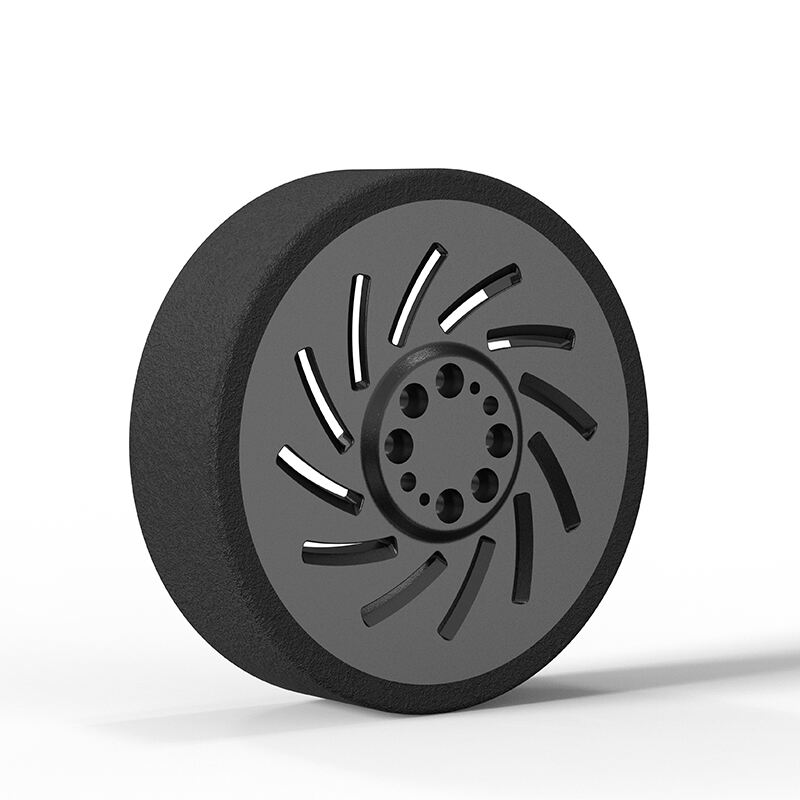
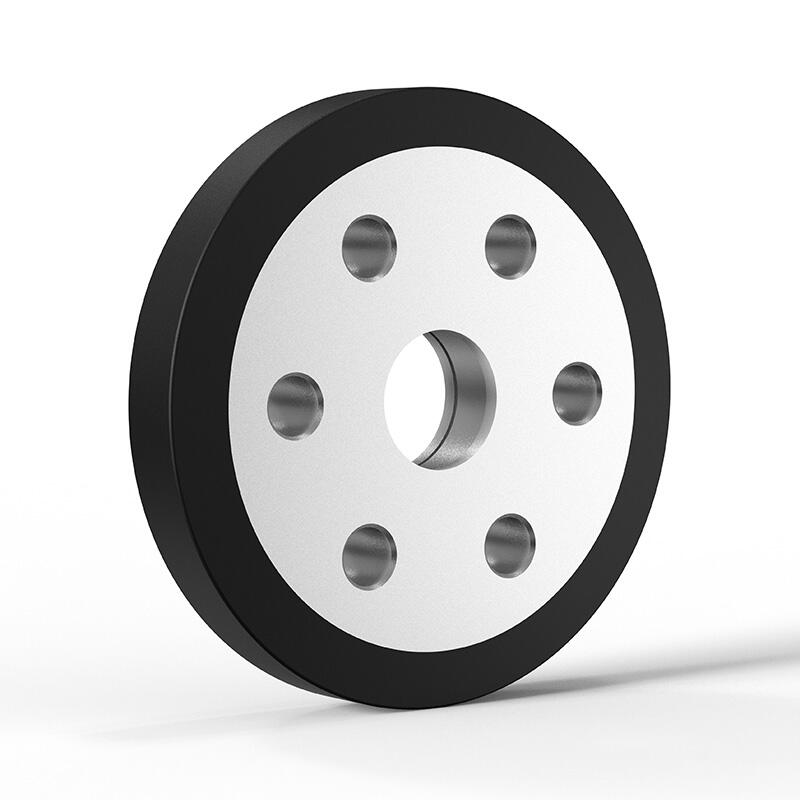
GEFA-250×80, hardness 95A, PU tread |
|
Driven Wheel |
Matching 250×80 specification, 95A |
|
Guide Wheel |
Custom side-guide configuration, 95A |
|
Load per Wheel |
2 tons |
|
Trolley Load Rating |
3 tons |
|
Line Speed |
1 km/h |
|
Throughput |
10 vehicles/hour |
|
Ambient Conditions |
Ambient temperature, dry; no oil mist or chemical exposure |
① Eamflex 93A High-Wear-Resistance Compound
HANKE's proprietary Eamflex 93A polyurethane tread compound is engineered specifically for heavy-load, high-cycle industrial applications. Its abrasion resistance (tested per DIN 53516) significantly outperforms conventional PU materials, maintaining tread integrity under sustained 2-ton per-wheel loads and effectively suppressing the initiation of delamination and cracking.
② Optimized Core-Shell Bonding Process
By optimizing the bonding process between polyurethane and the metal wheel core, HANKE ensures superior adhesion strength at the tread-to-core interface. Across 48 months of actual operation, all in-service products have remained free of delamination, validating the reliability of this process under these operating conditions.
③ Full-Dimensional Inspection System
HANKE implements ISO 9001 quality control throughout production, utilizing a CHOTEST coordinate measuring machine (CMM) for full-dimensional inspection of all wheel assemblies, ensuring geometric accuracy meets production line installation requirements.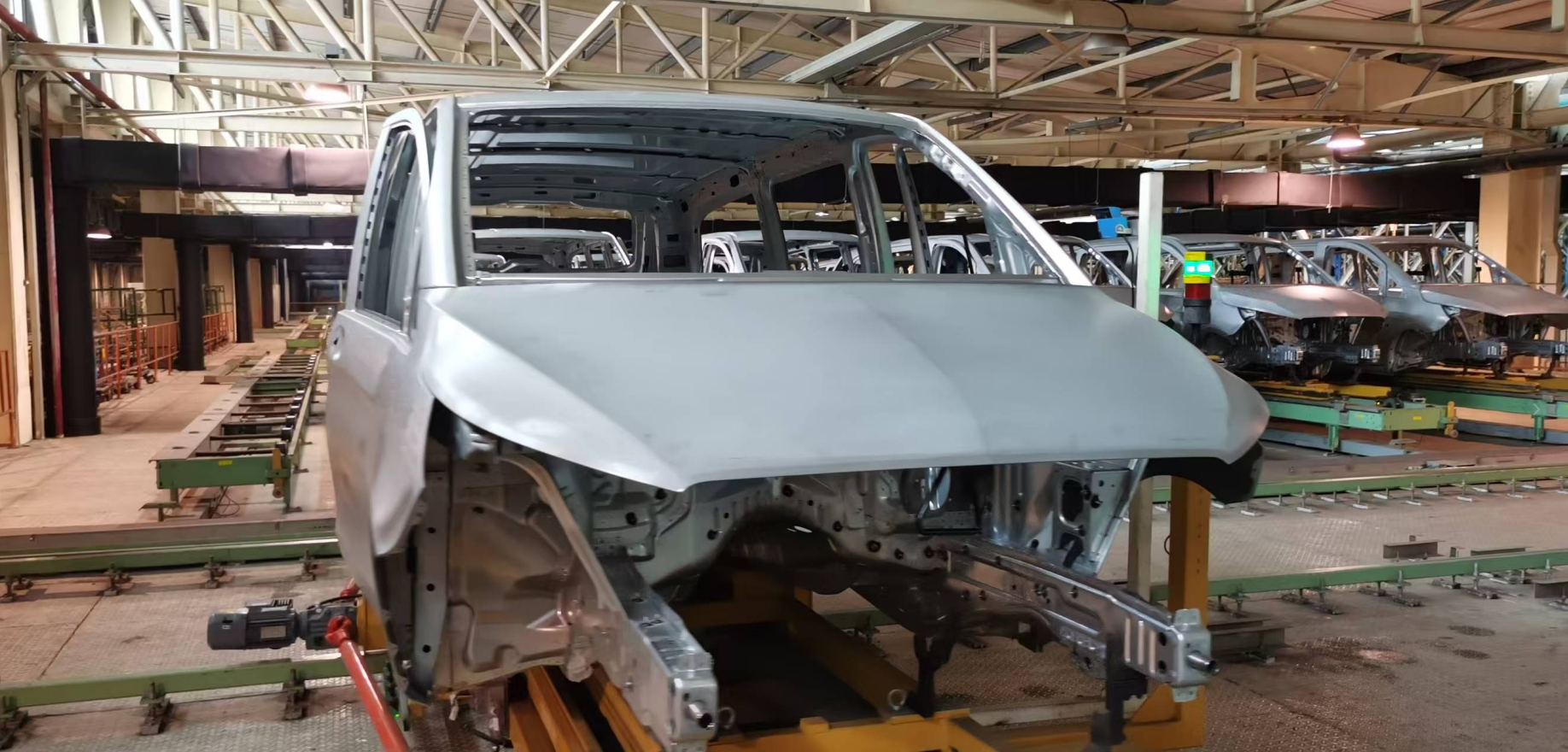
Since the first batch was deployed in 2021, HANKE's PU drive wheels for Fujian Benz have been in stable operation for over 48 months. Key quantified results:
• Zero delamination incidents across all in-service wheels (48 months and counting)
• Zero cracking or tread separation failures
• Service life extended approximately 30% versus the previous supplier's products
• Per-wheel load capacity: 2 tons (validated in continuous operation)
• Production line speed: 1 km/h, 10 vehicles per hour throughput
• Zero production downtime attributed to wheel failure since deployment
Based on a single production line running 300 days/year, 20 hours/day:
• Reduced downtime: from an average of ~24 hours/year (attributed to wheel issues with the previous supplier) to near zero
• Lower spare parts cost: a 30% longer replacement cycle translates to reduced procurement frequency, with annual spare parts costs down approximately 20–25%
• Eliminated safety risk: 48 months of zero delamination and zero cracking fundamentally removes the safety hazards associated with wheel failure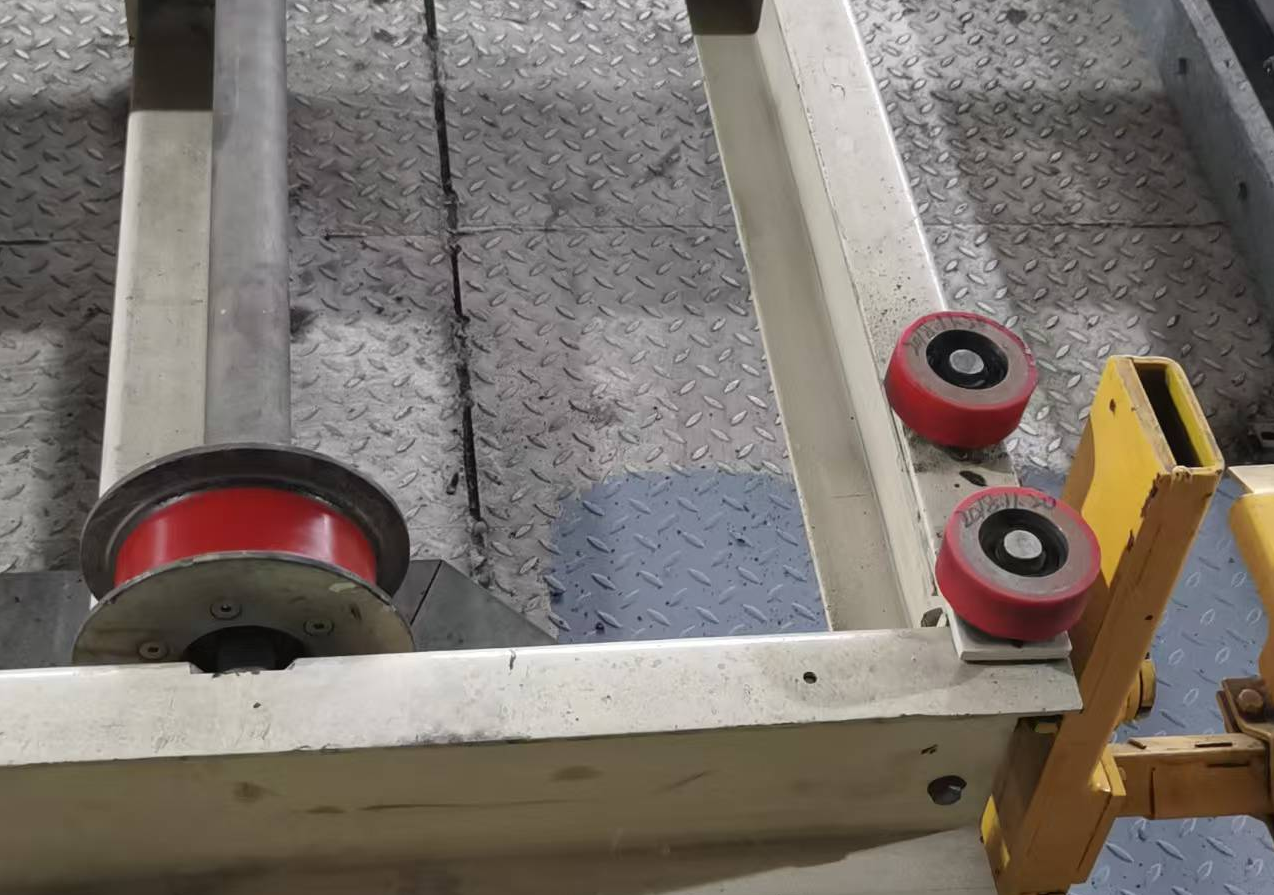
Q: Why can't standard warehouse logistics wheels be used on automotive production lines?
A: They cannot. Automotive line drive wheels have far higher load ratings (2+ tons per wheel), operating duty cycles (24/7 continuous), and safety requirements than typical warehouse applications. Standard PU wheels under sustained 2-ton loads are prone to tread fatigue cracking and delamination — and on an automotive line, every minute of downtime costs tens of thousands in lost production.
Q: What is the typical service life of PU drive wheels on automotive production lines?
A: It depends on operating conditions. In ambient-temperature, dry environments with per-wheel loads ≤2 tons and line speeds ≤1.5 km/h, PU drive wheels using the Eamflex 93A wear-resistant compound can achieve a service life of 36–48+ months. Service life shortens proportionally when ambient temperatures exceed 50°C, or when oil mist or chemical exposure is present.
Q: Why do PU drive wheels delaminate under heavy loads?
A: Delamination is primarily caused by inadequate bonding process and tread compound compatibility. The bond strength between polyurethane and the metal wheel core depends on three factors: (1) core surface treatment (sandblasting/phosphating); (2) shrinkage rate and internal stress control of the PU material; (3) casting process temperature and pressure parameters. Inadequate control at any stage can lead to separation after prolonged heavy-load operation.
Q: What hardness should be selected for automotive production line drive wheels?
A: Heavy-load production lines generally require 90–95A hardness. Higher hardness delivers greater load-bearing capacity and better wear resistance, but also increases friction against the guide rail. At 95A, polyurethane provides sufficient support rigidity for 2-ton per-wheel loads while striking an optimal balance between wear resistance and rolling resistance. Solutions below 85A hardness tend to deform excessively under heavy loads, accelerating tread aging.
Q: How do you determine when a PU drive wheel needs replacement?
A: Replace the wheel if any of the following conditions are observed: (1) visually detectable cracks or localized delamination on the tread surface; (2) wheel diameter wear exceeding 3% of the original dimension; (3) noticeable vibration or abnormal noise during line operation; (4) tread hardness deviation exceeding ±5 Shore A from the initial value.
Q: What does the annual maintenance routine for automotive line drive wheels involve?
A: We recommend quarterly wheel inspections covering: tread surface condition (cracks/indentations), wheel diameter, tread hardness, bearing clearance, and mounting bolt torque. Conduct a load test every six months to verify stability under high load. Document each inspection to track service life trends over time.
• Automotive production lines impose extreme reliability demands on PU drive wheels, with delamination and cracking being the most common failure modes. The key to the solution lies in the optimized pairing of tread compound formulation and core-shell bonding technology.
• On-site inspection and operating-condition matching are the essential first step in product selection. For the Fujian Benz project, HANKE's engineering team conducted a thorough line-condition survey before proposing a customized product configuration — not off-the-shelf generic parts.
• The Eamflex 93A high-wear-resistance compound has been validated under 2-ton-class heavy-load conditions. The 48-month zero-post-sale-issue track record demonstrates this compound system's potential for cross-application replication in similar operating environments.
• Quantifying spare parts cost savings and downtime reduction is the critical dimension for evaluating PU drive wheel supplier value. Behind the 30% longer service life lies not just reduced procurement expense, but more importantly, the elimination of unplanned production line stoppages.
HANKE Polyurethane Technology Co., Ltd. is a specialized and innovative enterprise focused on polyurethane drive wheels, driven wheels, and coated rollers. The company's core product portfolio includes two flagship tread compound families — Eamflex 93A (high wear resistance) and Saxflex 75A (floor protection) — across multiple drive wheel series including GEFA and GSFG, with annual shipment volumes ranking among the industry leaders.
HANKE holds 52 national patents (covering invention patents, utility models, and design patents), is equipped with a CHOTEST coordinate measuring machine (1 μm accuracy), and implements a three-stage IQC/IPQC/OQC quality inspection process. Products are widely deployed across AGV/AMR systems, floor scrubbers, automotive production lines, and intelligent logistics conveyance applications. Key partners include Kinco Electric, Tennant Gaomei, Mercedes-Benz, and KONE Elevator.
Contact Information
• Website: www.hankepu.com
• Email: [email protected]
• Company: HANKE Polyurethane Technology Co., Ltd.