EN
EN
Quick Links
Kinco AGV Servo Wheel Polyurethane Bonding Solution— HANKE × Kinco Automation Customer Case Study
► Kinco Automation (688160.SH) is a STAR Market-listed core components enterprise for robotics. Its i-Kinco servo wheels and omnidirectional steering wheels are widely deployed in AGV/AMR systems, with cumulative shipments of low-voltage servo systems exceeding 1.2 million units and robotics revenue growing 65.93% YoY in the first three quarters of 2025.
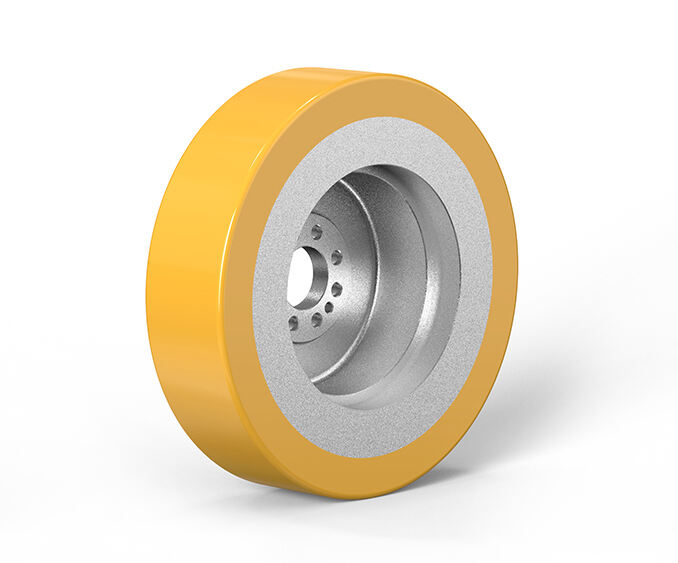
► HANKE has custom-developed two polyurethane tread compound systems for Kinco: Eamflex (93 Shore A, high wear resistance) and Saxflex (75 Shore A, low noise), covering the full range from heavy-load AGVs to cleanroom AMR servo wheels.
► The collaboration spans the complete process: aluminum/steel core hub bonding, curved tread mold design, rapid formulation micro-adjustment (3–5 working days), and volume delivery. HANKE is concurrently building a dedicated servo wheel bonding line to support Kinco's Changzhou base capacity ramp-up.
► The polyurethane tread is the "last centimeter" where the AGV drive system meets the ground — wear resistance, noise reduction, grip, and bond reliability — directly determining servo wheel overall performance and service life.
Kinco Automation (688160.SH) was founded in 2008 and listed on the Shanghai Stock Exchange STAR Market in 2020. Headquartered in Pudong, Shanghai, the company operates two major manufacturing bases in Shenzhen and Changzhou, with a workforce of approximately 1,081 employees. Starting from HMI (Human-Machine Interface) and PLC controllers, Kinco progressively expanded into the drive layer with in-house developed servo drives and servo motors, and in recent years has positioned its low-voltage servo systems and integrated actuators as core growth engines.
Kinco's Changzhou subsidiary — Changzhou Kinco Motor Co., Ltd. (renamed from "Changzhou Jingna Motor Co., Ltd." in December 2025) — serves as the group's core manufacturing base for servo motors, frameless torque motors, and i-Kinco integrated units, employing approximately 255 staff and hosting the Kinco Robotics Technology Research Institute. The new Changzhou plant has now completed full relocation, with production line setup approximately 80% complete and the Phase II building having entered the design stage. The company has raised RMB 457 million through a private placement, with plans to significantly expand motor production capacity at the Changzhou base.
From a financial perspective, drive systems (including servo motors, drives, and i-Kinco servo wheels/steering wheels/joint modules) represent Kinco's primary revenue source, contributing approximately 70% of total revenue with a consolidated gross margin of 65.81%. In robotics, the company achieved revenue of RMB 257 million in the first three quarters of 2025, up 65.93% year-on-year, demonstrating strong growth momentum. Kinco's cumulative low-voltage servo system shipments have surpassed 1.2 million units, with market share in the AGV/AMR sector ranking among the industry leaders.
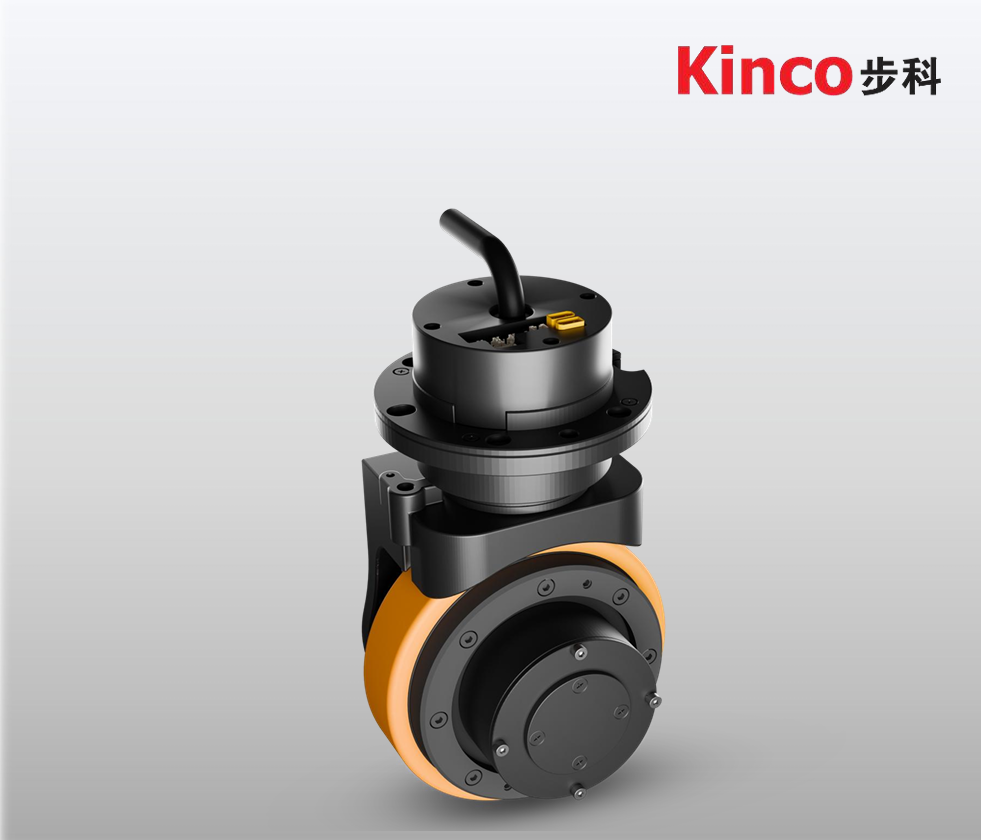
Kinco's i-Kinco integrated servo wheels tightly integrate the motor, encoder, reducer, and wheel body into a single unit, widely used in AGVs and AMRs across automotive manufacturing, e-commerce logistics, 3C electronics, and other industries. The contact interface between the servo wheel body and the ground — the polyurethane tread — may appear straightforward, but it is, in fact, a critical determinant of overall wheel performance. Tread wear resistance directly affects wheel replacement intervals; the balance between hardness and resilience determines AGV positioning accuracy and operating noise; and the bond strength between tread and hub dictates long-term operational reliability. As the industry saying goes: the polyurethane tread is "the critical last centimeter" of the AGV drive system.
Kinco's servo wheel product line spans the full range from light-load warehouse AMRs to heavy-load production line AGVs (1–3 ton class). Different applications impose substantially different tread performance requirements — heavy-load conditions demand high wear resistance and high load-bearing capacity, while cleanroom applications require low noise and floor protection. Kinco needed more than a standard component supplier; it required a polyurethane solution partner capable of deep collaboration across the four dimensions of formulation, process, tooling, and quality control. This is precisely the starting point of the HANKE-Kinco partnership.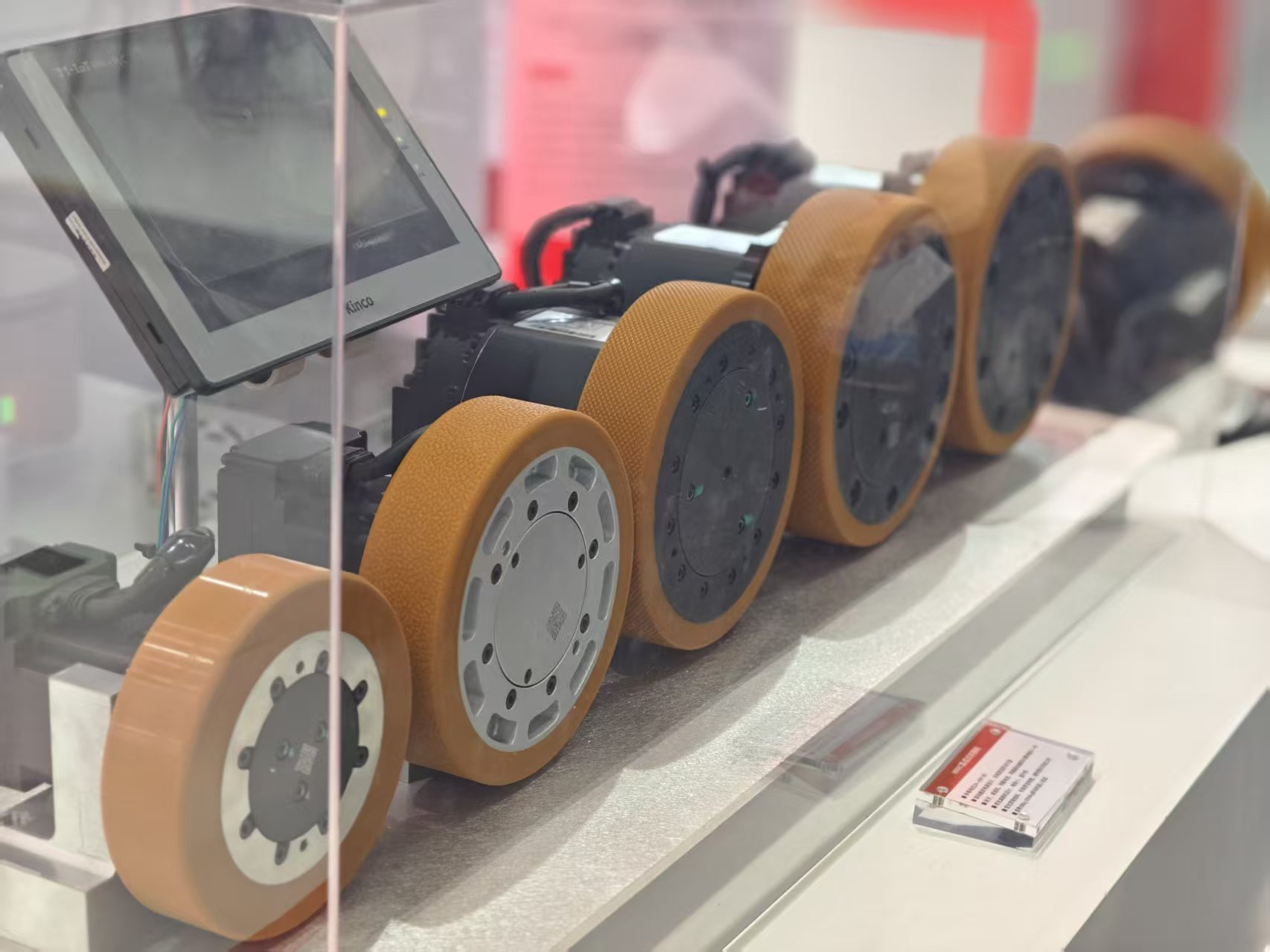
|
Dimension |
Requirement |
Challenge |
|
Wear Resistance |
Heavy-load AGVs (1–3 ton class) running 24/7 on factory floors require tread life measured in years |
Standard PU treads experience accelerated fatigue wear under sustained 2-ton+ loads, with premature cracking or delamination |
|
Noise & Floor Protection |
AMRs operating in cleanrooms and e-commerce warehouses require ≤65 dB operating noise and zero floor marking |
High-hardness PU treads (90A+) generate excessive noise on hard floors and may leave marks; low-hardness treads compromise load capacity |
|
Hub Bonding Reliability |
Aluminum and steel core hubs have markedly different surface energy and thermal properties, requiring differentiated bonding processes |
Debonding between PU tread and hub is the single most common failure mode — any separation means immediate wheel replacement |
|
Tread Geometry Precision |
Omnidirectional steering wheels use curved tread profiles (non-cylindrical), requiring high mold cavity accuracy |
Deviations in tread curvature cause uneven load distribution, accelerated local wear, and compromised positioning accuracy |
The two systems are not simply "one hard, one soft." They are designed with fundamentally different approaches at the prepolymer selection and chain extender ratio level. HANKE's formulation database contains hundreds of variants, enabling rapid matching or micro-adjustment once Kinco provides operating parameters. The current formulation adjustment cycle has been compressed to 3–5 working days.
|
System |
Hardness |
DIN Abrasion |
Resilience |
Tensile Strength |
Target Application |
|
Eamflex 93A |
93 Shore A |
≤30 mm³ |
≥35% |
≥45 MPa |
Heavy-load AGVs: automotive production lines, foundries, steel plants. High load capacity (1–3 ton), high wear resistance |
|
Saxflex 75A |
75 Shore A |
≤45 mm³ |
≥50% |
≥35 MPa |
Cleanroom AMRs: e-commerce warehouses, pharmaceutical cleanrooms, electronics manufacturing. Low noise (≤65 dB), floor protection, anti-marking |
Kinco servo wheels use two hub types — aluminum core and steel core — which differ significantly in surface energy and thermal characteristics. HANKE has developed differentiated approaches for mold design and pretreatment processes.
Aluminum Core Hubs:
Due to the low surface energy of aluminum, pretreatment employs sandblasting roughening combined with a primer coating process to enhance both mechanical anchoring and chemical bonding. The mold uses a low-temperature, slow-pour casting protocol to minimize thermal deformation of the aluminum core during the casting process.
Steel Core Hubs:
Steel offers inherently better natural adhesion with polyurethane. Pretreatment follows a three-step sequence: degreasing → sandblasting → coupling agent application. To accommodate the high thermal capacity of steel, the mold design incorporates preheating and holding stages to ensure adequate flowability of the casting compound and thorough air evacuation.
Curved Tread (Omnidirectional Steering Wheels):
Kinco's omnidirectional steering wheels feature a curved tread profile (non-cylindrical surface) that demands high mold cavity precision. HANKE uses CNC-machined mold cavities, with tread curvature tolerances controlled within ±0.1 mm, ensuring strict geometric matching between the tread profile and Kinco's hub specifications.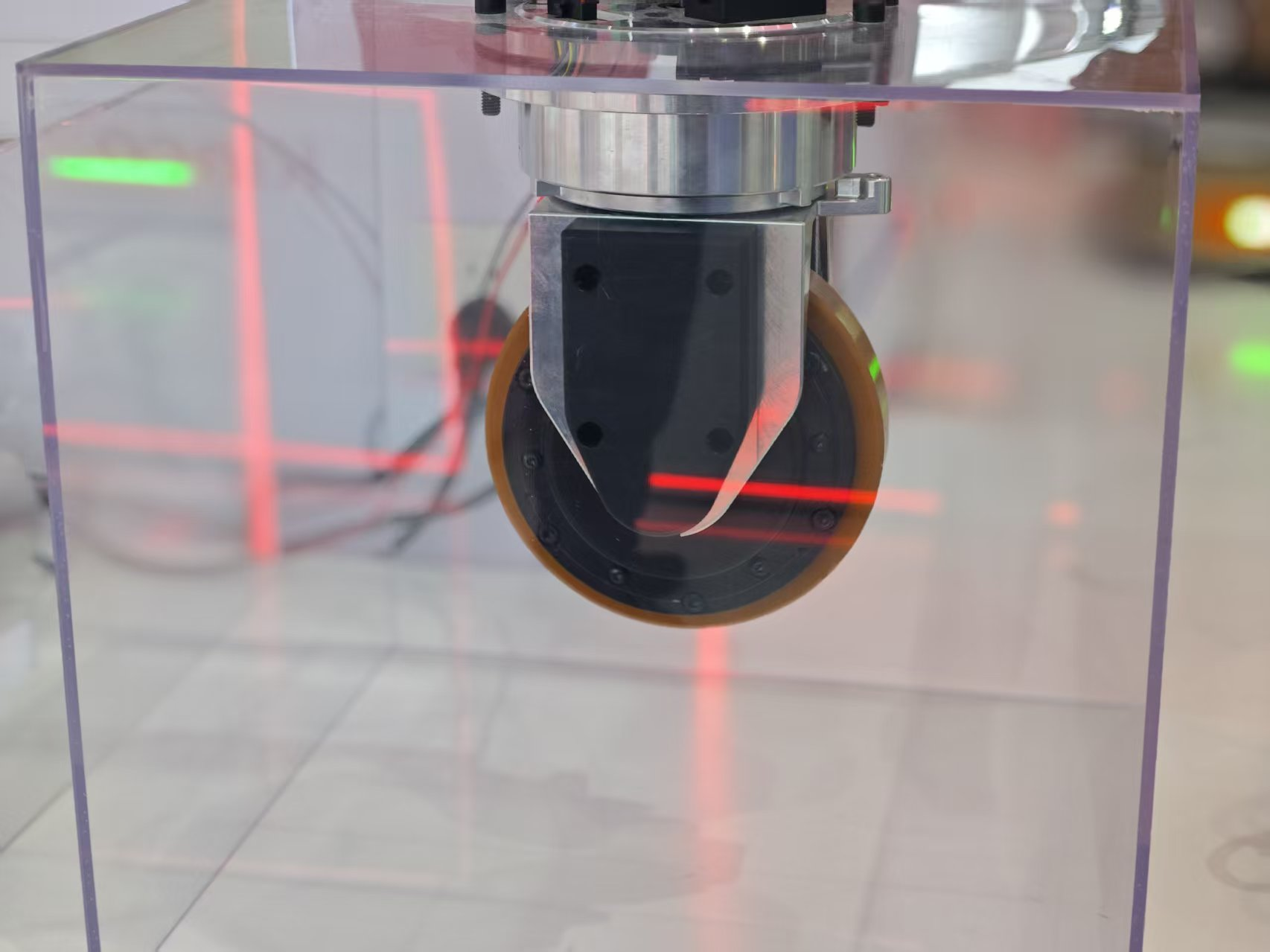
|
Inspection Stage |
Method |
Key Parameters |
Frequency |
|
IQC (Incoming) |
Visual inspection + dimensional measurement + surface roughness |
Hub dimensions, surface roughness Ra, cleanliness |
Per batch |
|
IPQC (In-Process) |
Temperature monitoring + viscosity testing + gel time |
Casting temperature, prepolymer viscosity, gel time |
Per casting cycle |
|
OQC (Outgoing) |
CMM full-dimensional + Shore hardness + bond integrity + dynamic runout |
Dimensions, hardness (Shore A), bond strength, radial runout |
100% inspection |
Kinco provided servo wheel operating parameters — including rated load, maximum speed, floor type, ambient temperature range, and target service mileage. HANKE's technical team screened 3–5 candidate formulations from the database, conducted laboratory sampling and in-house running tests, and finalized the optimal solution. The first batch delivered comprised 6 sample specifications — 3 each for Eamflex and Saxflex — covering Kinco's mainstream servo wheel models, for validation on Kinco's in-house AGV test platform.
During sample validation, Kinco provided feedback on tread wear uniformity and hub bond strength improvement requirements for specific models. HANKE completed formulation micro-adjustment and process parameter optimization within one week, and the second-round samples passed Kinco's internal evaluation. The project then entered the small-batch trial phase, with approximately 200 bonded wheels delivered and mounted on AGV prototype vehicles supplied by Kinco to end customers. These units accumulated over 500 hours of operation under real-world conditions with stable performance.
Following successful small-batch validation, both parties jointly established the bonded wheel technical specification and quality acceptance criteria, codifying the formulation, process parameters, and inspection methods. HANKE designated Kinco as a key account, establishing a dedicated production line and safety stock. Monthly production capacity is ample, ensuring supply stability for both Kinco's routine orders and production fluctuation periods.
Since 2025, with Kinco's robotics business experiencing rapid growth (Q1–Q3 revenue up 65.93% YoY), HANKE has adjusted capacity planning in parallel, adding a new dedicated servo wheel bonding line. The scope of technical collaboration is also expanding — from AGV servo wheels into new directions such as omnidirectional steering wheel curved tread optimization and micro-bonding for humanoid robot joints.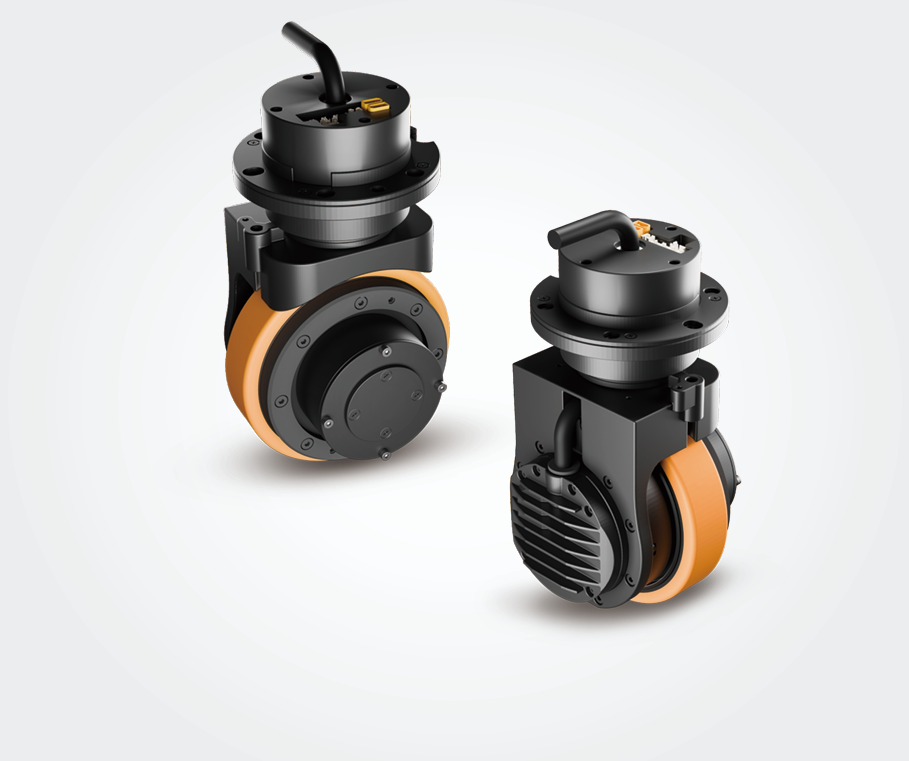
Product Dimension:
The Eamflex and Saxflex dual tread systems comprehensively cover the full range of Kinco's AGV servo wheel requirements. Formulation adjustment cycle time has been compressed from approximately 2 weeks in early collaboration to the current 3–5 working days. In an environment where servo motor and drive technologies are converging, polyurethane tread performance — wear resistance, low noise, grip, service life — is becoming a component of Kinco's wheel-level competitive differentiation.
Supply Chain Dimension:
HANKE proactively planned capacity and concurrently built a dedicated production line. During the critical phase of Kinco's Changzhou new plant capacity ramp-up, there were zero instances of supply disruption due to bonding capacity shortfalls. Against the backdrop of intensifying AGV industry competition and end customers' ever-tightening delivery requirements, this supply chain stability provides Kinco with a foundation for maintaining customer relationships.
Strategic Dimension:
The polyurethane tread is transitioning from a "standard purchased component" to a "co-developed core component." The deep collaboration between Kinco and HANKE has created a technical barrier in AGV servo wheel performance differentiation that is difficult for competitors to rapidly replicate.
Q: What products does HANKE supply to Kinco?
A: HANKE custom-develops polyurethane bonded treads for Kinco's AGV servo wheels and omnidirectional steering wheels, encompassing two compound systems — Eamflex (93 Shore A, high wear resistance and high load capacity for heavy-duty AGVs) and Saxflex (75 Shore A, low-noise floor protection for cleanroom AMRs) — covering the complete bonding process for both aluminum-core and steel-core hubs.
Q: What is the core difference between Eamflex and Saxflex?
A: Eamflex at 93A hardness, with DIN abrasion ≤30 mm³ and resilience ≥35%, is designed for heavy-load, high-wear environments such as automotive production lines and foundries. Saxflex at 75A hardness, with DIN abrasion ≤45 mm³ and resilience ≥50%, is engineered for low-noise, floor-protective applications such as e-commerce warehouses and pharmaceutical cleanrooms. The two systems differ fundamentally at the prepolymer and chain extender level — this is not a simple hardness adjustment.
Q: Can HANKE handle different hub materials for bonding?
A: Yes. Aluminum core hubs use sandblasting roughening + primer coating with low-temperature slow-pour casting to minimize thermal deformation. Steel core hubs follow a three-step pretreatment of degreasing + sandblasting + coupling agent, with added preheating and holding stages in the mold to ensure casting quality. Curved tread profiles (steering wheels) are produced with CNC-machined molds, maintaining curvature tolerance within ±0.1 mm.
Q: How long does formulation micro-adjustment take?
A: Reduced from approximately 2 weeks in early collaboration to the current 3–5 working days. Based on a database of hundreds of formulation variants, operating parameters can be input for rapid matching or micro-adjustment.
Q: What stages has the collaboration gone through?
A: Four stages: Sample Development (~4 weeks, 6 specifications) → Small-Batch Trial (~8 weeks, 200 units, 500+ hours of real-world testing) → Volume Supply (technical specification codified, dedicated production line) → Production Line Synergy (new dedicated servo wheel bonding line built, new projects expanding in parallel).
Q: How is Kinco's robotics business growing?
A: In the first three quarters of 2025, robotics revenue reached RMB 257 million, up 65.93% YoY. The new Changzhou plant has completed relocation with production line setup at ~80%; the Phase II building has entered the design stage. The RMB 457 million private placement is primarily directed toward expanding motor production capacity. Full-year 2025 results are expected to show continued growth.
HANKE Polyurethane Technology Co., Ltd. is a specialized and innovative enterprise focused on polyurethane drive wheels, driven wheels, and coated rollers. The company's core product portfolio includes two flagship tread compound families — Eamflex 93A (high wear resistance) and Saxflex 75A (floor protection) — across multiple drive wheel series including GEFA and GSFG, with annual shipment volumes ranking among the industry leaders.
HANKE holds 52 national patents (covering invention patents, utility models, and design patents), is equipped with a CHOTEST coordinate measuring machine (1 μm accuracy), and implements a three-stage IQC/IPQC/OQC quality inspection process. Products are widely deployed across AGV/AMR systems, floor scrubbers, automotive production lines, and intelligent logistics conveyance applications. Key partners include Kinco Automation, Tennant Gaomei, Mercedes-Benz, and KONE Elevator.
Contact Information
• Website: www.hankepu.com
• Email: [email protected]
• Company: HANKE Polyurethane Technology Co., Ltd.