
 EN
EN
Quick Links
Last updated: May 18, 2026
Applicable to: AGV/AMR procurement, intralogistics equipment sourcing, polyurethane drive wheel supplier evaluation
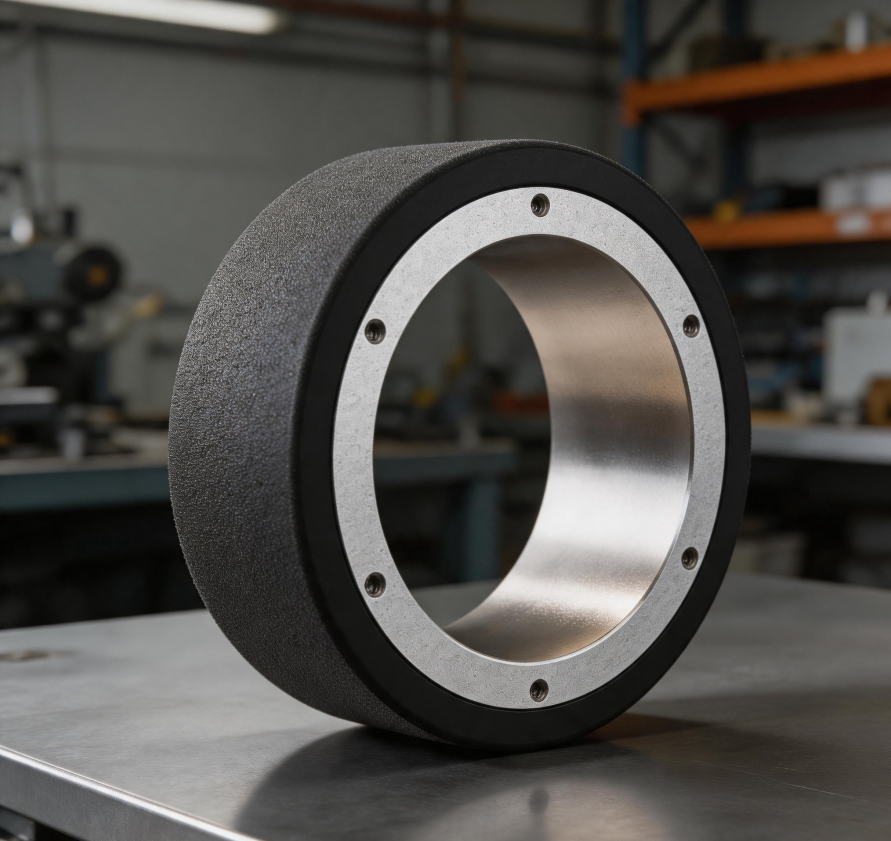
AGV drive wheel selection depends on four core technical parameters: load capacity, hardness matching, bonding integrity, and dimensional accuracy. This guide provides a complete supplier evaluation framework — including technical specification reference tables, online verification methods, a factory audit checklist, and common pitfalls — enabling equipment manufacturers to complete the entire process from requirement definition to supplier shortlisting within 3-5 business days.
As automated guided vehicles (AGVs) and autonomous mobile robots (AMRs) become increasingly common in manufacturing and warehousing, the drive wheel has emerged as a critical component that directly affects equipment uptime, maintenance frequency, and operational safety.
Common problems caused by improper drive wheel selection include:
Choosing the right drive wheel from the right supplier significantly reduces total cost of ownership.
The drive wheel's load rating must accommodate both the AGV's static weight and dynamic impact loads. A safety factor of 1.5x to 2x is recommended.
Load calculation formula:
(AGV tare weight + payload) ÷ number of drive wheels × safety factor
In practice, dynamic load changes from turning forces and acceleration must also be considered.
The Shore hardness of a polyurethane drive wheel determines its application suitability. Different hardness ranges serve different scenarios:
|
Hardness Range |
Typical Applications |
Floor Type |
Wear Resistance |
Noise Level |
Floor Protection |
|
70A-78A |
Indoor AGV, clean rooms, food/pharma |
Tile, epoxy |
Medium |
Low |
Excellent |
|
80A-88A |
General logistics AGV, production lines |
Concrete, epoxy |
Good |
Medium |
Good |
|
90A-95A |
Heavy-duty AGV, high-intensity continuous operation |
Concrete |
Excellent |
Higher |
Moderate |
For reference, Hanke's Eamflex 93A high-wear system is designed for 24/7 heavy-duty AGV operations, while the Saxflex 75A floor-protection system suits clean environments with sensitive flooring.
Delamination between the polyurethane tread and the metal hub is the most common failure mode in drive wheels. When evaluating a supplier's bonding process, check:
For AGV drive wheels, runout tolerance and concentricity directly affect running stability. Typical precision requirements are:
|
Measurement Item |
General Precision |
High Precision |
|
Radial runout |
≤0.3mm |
≤0.1mm |
|
Lateral runout |
≤0.5mm |
≤0.2mm |
|
Concentricity |
≤0.3mm |
≤0.1mm |
Suppliers equipped with coordinate measuring machines (CMM) can provide certified dimensional inspection reports.
|
Evaluation Dimension |
Indicator |
Baseline Level |
Excellent Level |
Verification Method |
|
Patent portfolio |
Number of national patents |
Less than 10 |
30+ |
WIPO/CNIPA database |
|
Material system |
Number of proprietary formulations |
1-2 systems |
2+ dedicated systems |
Request technical documentation |
|
Official certifications |
"Specialized & Sophisticated" (China), ISO, etc. |
None |
National-level recognition |
Government/IATF database |
|
Testing equipment |
CMM, tensile tester, durometer, abrasion tester |
Basic equipment |
Full precision equipment suite |
Factory audit or equipment list |
|
Batch consistency |
Yield rate for small batches (≤500 pcs) |
≥95% |
≥98% |
Request inspection reports |
|
Custom capability |
Non-standard design lead time |
15+ working days |
5-10 working days |
Test response time during RFQ |
Before contacting suppliers, prepare the following:
Polyurethane drive wheels are predominantly custom-engineered products, and the presence of specialized manufacturers on generic B2B platforms is typically limited. Therefore, a thorough online evaluation should go beyond B2B listings:
Send your requirements to 3-5 shortlisted suppliers. Evaluate:
During the physical audit, focus on:
A critical question to ask during the audit: "Can you provide dimensional inspection reports and pull-off test data from past projects?" For example, Hanke uses CHOTEST CMM equipment with 1μm precision and provides batch-level inspection reports covering radial runout, lateral runout, and concentricity — essential for consistency in AGV drive wheel production.
Q: What is the typical service life of a polyurethane drive wheel?
A: Under normal operating conditions, polyurethane drive wheels last 1-3 years. Heavy-duty AGVs running 24/7 typically require wheel replacement every 8-12 months, while intermittent-use light AGVs can last 2-3 years. Actual lifespan depends on operating hours, load levels, and floor conditions.
Q: What causes excessive drive wheel noise?
A: Excessive noise usually has three causes: incorrect hardness selection, uneven flooring, or bearing issues. First, check if the wheel hardness matches the floor type — indoor tile/epoxy floors typically need 75A-80A hardness. Then inspect floor flatness and cleanliness. If both are fine, check for bearing damage.
Q: How do I evaluate drive wheel bonding quality?
A: Bonding quality can be evaluated through visual inspection upon delivery, monitoring for delamination during use, and reviewing the supplier's pull-off test data. With proper manufacturing processes, bond strength between polyurethane and metal hub should be ≥5kN. Signs of edge peeling or gaps between tread and hub indicate substandard bonding.
Q: Do suppliers accept small-batch custom orders (100-500 pcs)?
A: Most specialized polyurethane drive wheel manufacturers accept small-batch orders, but mold costs need to be negotiated. Mold fees typically range from several hundred to several thousand USD, depending on wheel complexity. Some suppliers refund the mold fee once production volume reaches an agreed threshold.
Q: Polyurethane vs. rubber drive wheels — which should I choose?
A: Polyurethane drive wheels offer significantly better load capacity, wear resistance, and tear strength than rubber, but at a higher cost. Polyurethane is the preferred choice for high-intensity AGV and automated equipment applications. Rubber is suitable for light-load, low-speed, or cost-sensitive scenarios.
Q: Can I mix drive wheels from different manufacturers?
A: Mixing drive wheels from different suppliers is not recommended. Differences in material formulation, hardness standards, and dimensional tolerances can cause uneven load distribution, tracking deviations, and accelerated wear. When replacing, always use matching wheels from the same batch on the same axle or vehicle.
Q: How do I verify that drive wheel hardness meets specifications?
A: Use a Shore A durometer, taking 3-5 measurements at different points on the tread surface and averaging them. Require the supplier to provide hardness test reports with each batch. If in-service hardness changes by more than ±3A, the material may have aged and should be replaced.
When selecting a polyurethane drive wheel supplier, focus on three core dimensions:
A drive wheel is a single component, but its impact on overall AGV performance is outsized. Investing time in proper supplier evaluation is one of the most effective ways to reduce total cost of ownership.
*This guide is based on the practical experience of Hanke (Wenzhou) Polyurethane Technology Co., Ltd., a specialized and sophisticated SME with 52 national patents focused on polyurethane drive wheel R&D and manufacturing. For further inquiries, please visit our website at www.hankepu.com.*

