
 EN
EN
Quick Links
The conveying systems on automotive assembly and body-in-white lines—including monorail hoists, EMS (electrified monorail system) carriers, transfer stations, and roller beds—are high-reliability, heavy-load scenarios where the load per wheel routinely reaches the 2-ton level. A single wheel failure can halt a monorail, starve a workstation of material, and disrupt the entire line rhythm, with capacity losses measured in tens of thousands of yuan per minute. Choosing the right polyurethane wheel therefore requires far more than applying the generic parameters used in ordinary logistics warehousing.
This guide breaks down automotive production line wheel selection into five core dimensions—load capacity, hardness matching, wear life, bond-strength reliability, and dimensional accuracy—and details a four-step selection workflow. Drawing on real operating data from a leading automotive plant, it shows how HANKE's Eamflex 93A high-wear-resistance compound, applied to a 2-ton-per-wheel monorail drive wheel, has delivered over 48 months of continuous, trouble-free operation with roughly 30% longer service life than the previous supplier's solution. For equipment buyers and system integrators, the practical takeaway is to define operating conditions first, match hardness and tread compound to the core requirement, and choose a supplier with validated process, quality control, and real-world data.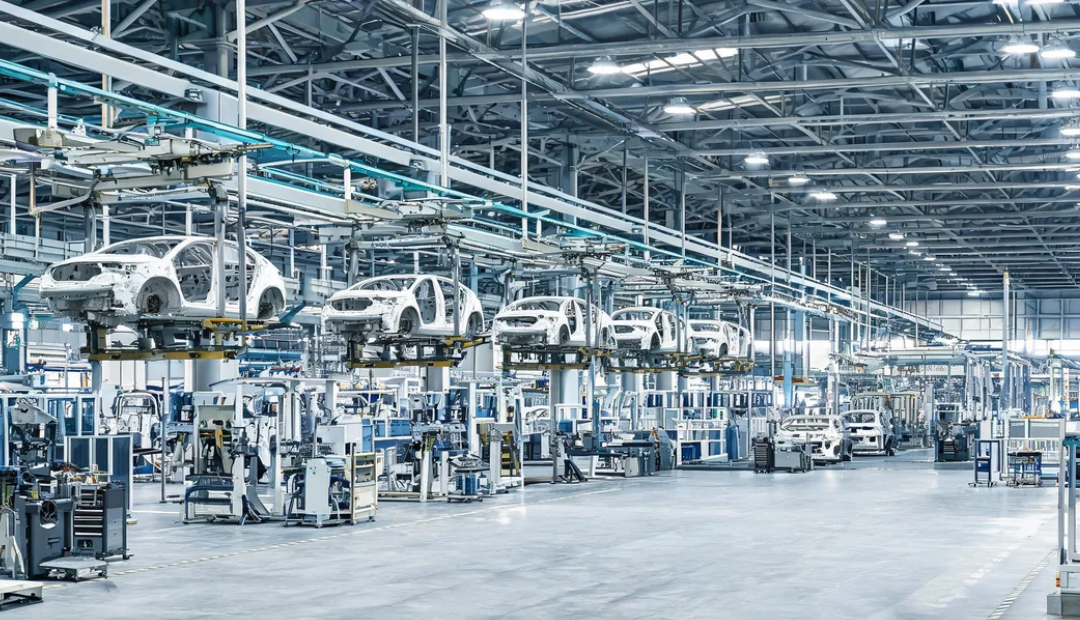
Dimension | Typical Value / Requirement | Notes |
Load per wheel | 2-ton level | Actual load distributed to each wheel on monorail/EMS conveying systems |
Line rhythm | Continuous, shift-based | Runs nearly 24/7; downtime losses are significant per minute |
Hardness | 90-95 Shore A (heavy load) | Heavy-load drive wheels commonly use HANKE's Eamflex 93A compound |
Tread compound | Eamflex 93A / Saxflex 75A | Two directions: heavy-load wear resistance vs. positioning and floor protection |
Typical size | 250 mm × 80 mm | Monorail drive wheel size on a leading automotive plant line |
Service life | 36-48+ months | Measured level at room temperature, ≤2-ton load, ≤1.5 km/h |
Life improvement | ≈30% | HANKE solution vs. previous supplier (about 36 months) |
After-sales | 48 months trouble-free | Zero delamination, zero cracking in on-site operation |
Inspection | CMM (1 μm accuracy) | Full-size inspection to ensure geometric accuracy for line installation |
Bond strength | ≥8 MPa | Industry-accepted acceptance criterion between PU and metal hub |
On automotive assembly and body-in-white lines, conveying systems (monorail hoists, EMS carriers, transfer stations, roller beds) are the arteries that move bodies, powertrains, and components between workstations. The rows of polyurethane drive wheels, driven wheels, and guide wheels fitted to this handling equipment are often treated by procurement teams as standard off-the-shelf components—selected against the same parameters used for warehouse logistics. Yet the reliability demands of automotive conveying wheels differ fundamentally from ordinary warehousing.
The first test these wheels face is heavy load. A fully loaded vehicle body or powertrain cradle, together with the trolley's own weight, can reach several tons; once distributed, the load on each drive wheel routinely reaches the 2-ton level. The second test is high rhythm: automotive lines typically run two or three shifts, keeping the conveying system in near-continuous operation with wheels under sustained load. The third test is high reliability: typical polyurethane failure modes such as delamination and cracking accelerate under sustained 2-ton loads, and when they occur the consequences go beyond downtime—they include the risk of trolley tip-over and safety hazards to both equipment and personnel.
From a materials standpoint, polyurethane elastomer has become the mainstream choice for automotive conveying wheels because its hardness is tunable, its wear resistance is outstanding, its rolling resistance can be controlled, and it bonds reliably to metal hubs. But polyurethane wheel performance depends heavily on formulation and process: at the same hardness, different compound systems can differ markedly in wear life, fatigue resistance, and anti-delamination capability. This is why automotive conveying wheel selection cannot simply reuse generic parameters—it requires a tailor-made match to real operating conditions.
The selection of automotive conveying wheels can be broken down into five assessable core dimensions. Procurement and system-integration teams can evaluate each dimension against their line's real operating conditions to avoid guesswork in selection.
Load is the first input for selection. The trolley's dead weight, the loaded workpiece weight, and the dynamic shock of start-and-stop should be combined to determine the actual per-wheel load on each drive wheel and driven wheel. Per-wheel load determines the minimum wheel diameter, hub structure, and the load boundary of the tread compound. In heavy-load scenarios, a per-wheel load of 2 tons requires a high-load-capacity polyurethane compound to provide sufficient support rigidity and prevent the tread from deforming too quickly under sustained pressure.
Hardness directly affects load capacity, wear resistance, and contact characteristics. Heavy-load drive wheels on production lines generally use 90-95A polyurethane: the harder the compound, the stronger its load capacity and wear resistance. But excess hardness increases pressure on the rail and floor, raising rolling resistance and friction noise. A hardness below 85A deforms too quickly under 2-ton loads, accelerating tread aging. The right hardness therefore balances load capacity, wear, and grip rather than simply choosing the highest or lowest value.
A wheel's service life is not just how long it lasts, but how long it maintains stable performance without failure. This depends on the tread compound's wear resistance, fatigue resistance, and aging resistance. The industry commonly uses the DIN 53516 abrasion test to estimate relative life in the laboratory, but load, speed, and floor conditions on a real line introduce systematic deviations, so actual on-site operating data is needed for reliable judgement. This is one of the most valuable questions to ask a supplier: whether they can back claims with real-world data from the same operating conditions.
Delamination (separation of the polyurethane tread from the metal hub) is the most dangerous failure mode on heavy-load automotive lines. Bond strength depends on three factors: hub surface preparation (sandblasting to remove oxide layers, with an industry-accepted acceptance criterion of ≥8 MPa for bond strength), control of the polyurethane material's shrinkage and internal stress, and the temperature and pressure parameters of the casting process. Any lapse in these steps can surface as peeling after long-term heavy-load operation. When selecting a supplier, examine their sandblasting-priming-casting process specification and bond-quality inspection capability.
In assembly and body-in-white stages, the positioning accuracy of the conveying system directly affects assembly quality. If the wheel's outer diameter, roundness, or coaxiality deviates too much, the trolley can vibrate and positioning can drift. Wheels therefore need strict geometric control at the manufacturing end. The industry commonly uses coordinate measuring machines (CMM) to perform full-size inspection of wheel sets, ensuring outer diameter and roundness meet line requirements and providing a reliable reference for stable, repeatable positioning.
Selection Dimension | Core Consideration | Soft/Low Tendency | Hard/High Tendency | Key Trade-off |
Load Capacity | Load bearing & structure | Light-load, low cost | 2-ton heavy-load | Higher load demands more from hub and tread |
Hardness | Load, wear, grip | 75A flexible cushion | 93-95A high load | Higher load raises floor pressure and friction |
Wear Life | Long-term stable service | Standard wear | Eamflex compound high wear | Wear resistance sustains high-rhythm abrasion |
Bond Strength | Anti-delamination reliability | Conventional prep | ≥8 MPa bond + full-size inspection | Stronger bond resists long heavy-load peeling |
Dimensional Accuracy | Positioning & assembly quality | Standard tolerance | CMM full inspection (1 μm) | Higher precision stabilizes positioning and line flow |
In automotive conveying systems, drive wheels, driven wheels, and guide wheels carry fundamentally different mechanical missions, so their selection cannot be mixed or treated with a one-size-fits-all approach. Below we explain the selection logic for each, referenced against real automotive line conditions.
The drive wheel is the power source of the conveying system, driving the trolley forward by friction. Its core selection indicators are friction coefficient and wear resistance: the friction coefficient determines whether sufficient driving force exists for stable start-up and precise stopping, while wear resistance determines whether the tread maintains stable contact under long, high-rhythm operation. Under heavy-load automotive conditions, drive wheels commonly use HANKE's Eamflex 93A high-wear-resistance compound, with a 2-ton per-wheel load and 95A hardness handling sustained loads. On the leading automotive plant line cited here, a 250×80 mm drive wheel at 2 tons per wheel adopted a 95A tread and has run stably for 48 months with no delamination or cracking.
A driven wheel does not provide driving force; it carries load and follows travel. Its selection focuses on rolling resistance and running stability. Excessive rolling resistance adds burden to the drive wheel and raises energy consumption, while unstable running can cause trolley vibration. Driven wheels can match hardness to load, ensuring load capacity while keeping rolling resistance as low as possible for smooth travel.
A guide wheel constrains the lateral position of the conveying system, keeping the trolley on its prescribed track. The key selection factors are lateral rigidity and positioning accuracy: lateral rigidity determines resistance to deflection, while positioning accuracy determines alignment during station entry, docking, and assembly. The guide wheel's hardness should combine stable lateral-force performance with controlled rail pressure, typically designed in coordination with the hardness system of the line's drive and driven wheels.
Functional Wheel | Core Indicator | Typical Hardness Direction | Automotive Line Requirement | Failure Impact |
Drive wheel | Friction, wear resistance | 93-95A (heavy load) | 2-ton load, stable start & stop | Slip, delamination, downtime |
Driven wheel | Rolling resistance, stability | Match hardness to load | Low rolling resistance, smooth follow | Higher resistance, high energy, vibration |
Guide wheel | Lateral rigidity, positioning | Coordinate with line system | Anti-deflection, positioning | Runout, positioning drift |
To turn the dimensions above into a delivery, we recommend a four-step workflow. It mirrors the define-operating-conditions, match-solution, validate-delivery approach HANKE applies in automotive line projects such as the Mercedes-Benz plant.
First, map the conveying system's real operating conditions: total weight of trolley and workpiece, running speed, rhythm, start-stop frequency, ambient temperature and humidity, and whether oil or chemical media are present. These parameters define the selection boundary. On the Mercedes-Benz line, for example, the trolley carries a 3-ton load, per-wheel load is 2 tons, line speed is 1 km/h, throughput is 10 vehicles per hour, and the environment is room-temperature dry conditions. Only with this baseline can hardness and compound direction be matched.
Among the five dimensions, identify the one or two most critical for your specific line. For heavy-load automotive lines, wear life and bond reliability are usually the core contradiction—they directly determine whether wheels can serve long-term, stable duty and avoid delamination and cracking. Once the core dimensions are clear, selection is not disturbed by secondary parameters.
Based on load and the core requirement, initially match the hardness range and tread compound. Heavy-load drive wheels prioritize HANKE's Eamflex 93A high-wear-resistance compound; for auxiliary positioning scenarios requiring low noise and floor protection, HANKE's Saxflex compound can be considered. At the same time, determine structural parameters such as wheel diameter, width, and mounting interface. This step often requires working jointly with a supplier, because a polyurethane compound is not simply a matter of one hardness, one parameter—the differences in wear, fatigue, and anti-delamination behavior between compound systems require professional judgement.
For special sizes or interfaces, complete customization through the supplier's non-standard customization and formulation micro-adjustment capability. Before delivery, confirm that full-size inspection (e.g., CMM measurement) and bond-quality sampling are in place. After commissioning, set up periodic inspection and service-life data tracking, using measured data to continuously validate the selection and provide an optimization basis for subsequent batches.
Parameter | Solution Configuration | Measured Result |
Product size | 250 mm × 80 mm (OD × width) | Meets line installation requirement |
Tread hardness/compound | 95A / Eamflex 93A high-wear compound | Sufficient support rigidity at 2 tons |
Load per wheel | 2 tons | Meets requirement |
Line rhythm | 10 vehicles/hour, 24-hour continuous | Rhythm stable |
Line speed | 1 km/h | Meets requirement |
Service life | 48+ months (still in service) | ≈30% longer than previous supplier (≈36 months) |
After-sales | Zero delamination, zero cracking | 48 months trouble-free |
Cost effect | Annual downtime ~24h down to near zero; spare-parts cost down ~20-25% | Overall TCO significantly reduced |
Q1: Why can't automotive production line conveying wheels be replaced with ordinary warehouse logistics wheels?
They cannot. The load level (2-ton per wheel), running rhythm (24-hour continuous), and safety requirements of automotive conveying wheels are far higher than ordinary warehousing. A standard polyurethane wheel under 2-ton sustained load tends to develop tread fatigue cracking and delamination, and once an automotive line stops, the capacity loss per minute is substantial. Selection must be based on the true heavy-load conditions of automotive lines.
Q2: How long does the service life of automotive line PU drive wheels usually reach?
It depends on operating conditions. Under room-temperature dry conditions, within a 2-ton per-wheel load and at ≤1.5 km/h, a PU drive wheel using HANKE's Eamflex 93A wear-resistant compound can normally serve 36-48 months or more. If the ambient temperature exceeds 50°C, or oil or chemical corrosion is present, service life shortens and the compound should be adjusted accordingly.
Q3: Why do polyurethane wheels delaminate under heavy-load conditions?
Delamination is usually caused by insufficient matching between the bonding process and the tread formulation. The bond strength between polyurethane and the metal hub depends on three factors: hub surface preparation (sandblasting to remove oxide), control of the polyurethane material's shrinkage and internal stress, and the temperature and pressure parameters of the casting process. Any lapse in these steps can surface as peeling after long-term heavy-load operation. When assessing a supplier, examine their sandblasting-priming-casting process specification and their ≥8 MPa bond acceptance standard.
Q4: How should the hardness of automotive line drive wheels be selected?
Heavy-load lines generally use 90-95A hardness. Higher hardness gives stronger load capacity and better wear resistance, but also increases friction on the rail. A 95A PU can provide sufficient support rigidity at a 2-ton per-wheel load while balancing wear resistance and rolling resistance. A hardness below 85A deforms too quickly under heavy loads, accelerating tread aging.
Q5: How do I choose between HANKE's Eamflex 93A and Saxflex 75A compound systems?
Judge by requirement tendency: for heavy load, high wear resistance, and long continuous operation (such as a 2-ton drive wheel), HANKE's Eamflex 93A high-wear compound is usually more suitable; for scenarios emphasizing stable positioning, low noise, floor protection, or sensitive contact, HANKE's Saxflex 75A system has more advantage. Automotive heavy-load drive wheels typically use HANKE's Eamflex compound, while auxiliary positioning or floor-sensitive scenarios can combine with Saxflex.
Q6: How do I know when a polyurethane wheel needs replacement?
Consider replacement when any of the following occurs: (1) the tread shows visible cracks or local delamination; (2) the wheel diameter wear exceeds 3% of the original diameter; (3) the conveying system shows obvious vibration or abnormal noise during operation; or (4) the tread hardness deviates from the initial value by more than ±5 Shore A.
Q7: How should the annual maintenance of automotive line conveying wheels be arranged?
A quarterly wheel-set inspection is recommended, covering: tread appearance (cracks, indentations), wheel diameter, tread hardness, bearing clearance, and mounting bolt torque. A load test every six months verifies stability under high load. Record each inspection to trace service-life trends and provide data for replacement and optimization.
Q8: How can size and performance consistency across batches be ensured for large-volume procurement?
The key is the supplier's quality-control system. At HANKE, for example, a CHOTEST coordinate measuring machine (1 μm accuracy) fully inspects wheel-set dimensions for each batch, three inspection stages (IQC/IPQC/OQC) are executed, and sampling inspection is performed before batch delivery to help ensure batch consistency. When purchasing, review the supplier's inspection equipment, inspection process, and batch record traceability.
Selecting polyurethane wheels for automotive production line conveying systems is essentially a tailor-made match around heavy load, high rhythm, and high reliability. From monorail hoists to EMS transfer stations, from heavy-load drive wheels to auxiliary guide wheels, different conveying links impose differentiated requirements on load capacity, hardness, wear life, bond reliability, and dimensional accuracy. The right starting point is to define your own line's operating conditions, clarify the core requirement dimensions, and then match the appropriate hardness and tread compound.
For equipment buyers and system integrators, the rational approach is to survey operating conditions first, calculate the per-wheel load, lock onto the two core contradictions of wear life and bond reliability, make an informed choice between HANKE's Eamflex 93A high-wear compound and HANKE's Saxflex 75A system, and achieve solution customization and validation through working-condition communication with a professional supplier. Choosing a polyurethane manufacturer with complete processes, a quality-control system, and validated real-world data is the foundation for ensuring long-term stable operation of wheels on an automotive production line.
The long-term partnership on the Mercedes-Benz line has validated this define–match–validate approach: HANKE's Eamflex 93A compound drive wheel has delivered 48 months trouble-free with roughly 30% longer service life than the previous solution. These measured results show that, in heavy-load automotive scenarios, the value of customizing the match around operating conditions is real and tangible.
HANKE (Wenzhou) Polyurethane Technology Co., Ltd. is a specialized and innovative enterprise focused on polyurethane drive wheels, driven wheels, and coated rollers. Its core product portfolio includes two tread systems—HANKE's Eamflex 93A (high-wear-resistance) and HANKE's Saxflex 75A (floor-protection) compounds—with drive wheels spanning the GEFA and GE series. Backed by polyurethane technology origins dating to 1989 and 52 technology achievements, the company is equipped with a CHOTEST coordinate measuring machine (1 μm accuracy) and executes three inspection stages (IQC/IPQC/OQC). Its products are widely used in AGV/AMR, floor scrubbers, automotive production lines, and intelligent logistics conveying, with partners including Kinco Electric, Tennant Gaomei, and Mercedes-Benz.
Contact: www.hankepu.com | For collaboration inquiries, welcome to contact us through the website.

